




- Read Time: 13 mins
Last updated July 23, 2026
Dr. Jeannette Armstrong
Jeannette Armstrong, Associate Professor in Indigenous Studies, is Syilx Okanagan. As an award-winning writer and activist, novelist and poet she has always sought to change deeply biased misconceptions related to Indigenous people. She is the recipient of the George Woodcock Lifetime Achievement Award for Literature. Her research in Indigenous philosophies and Okanagan Syilx thought and environmental ethics coded into Syilx oral literatures has been recognized locally and globally. She collaborates with Salish speaking groups to re-establish Indigenous languages, historical relationships, food resource ceremonies through gatherings, trading and protections of water and land practices. She is a recipient of the Eco Trust USA Buffett Award in Indigenous Leadership and serves on Canada’s Aboriginal Traditional Knowledge Subcommittee of Committee on the Status of Endangered Wildlife in Canada (COSEWIC).
Dan Benoit
Dan Benoit is a Manitoba Métis from the Red River Settlement area and a member of the Métis Nation. He has spent most of his life living near his ancestor's Red River Lot in St. Norbert Parish, at the family farm near Seven Sisters Falls, MB, and most recently in the small Metis Village of St. Laurent, MB.
Like many Métis, Dan has been raised in the traditions and culture of his People including their special relationship and stewardship with the land and water. Dan is a farmer, hunter, trapper and fisherman, and continues to exercise these traditions and pass them along to others. He believes it is essential to preserve traditional Métis culture and lifestyle while being in harmony with the land. Dan formerly operated his family's traditional, turn of the century Métis farm, with most of the buildings and equipment dating to pre-1900s. The animals and vegetable crops found on the farm are those that were found in the early Red River Settlement circa 1820s. He was also a member of the Métis Horticultural Heritage Society, and is keenly interested in preserving agricultural heritage species and biodiversity. Dan has more than 10 years post-secondary education and has various degrees, diplomas and certificates in Natural Resources Management, Ecology and water and wastewater management from University College of the North, Red River College, University of Ottawa, and the University of Manitoba. He has worked for both industry and all three levels of government in the natural resources and environment field. Dan has worked for Tolko Forest Industries, the Canadian Forest Service, Manitoba Conservation, and the Whitemouth River Conservation District, amongst others. Dan has also worked for the RCMP and the Canadian Forces as an Officer. In addition to his farm operation, he has 10 years of experience as a consultant to First Nations Bands and Northern Affairs Communities in Manitoba regarding community development, environment and hydro-electric generation issues, and has owned and operated an eco- and Aboriginal -tourism guiding business in Eastern and Northern Manitoba, and Northwestern Ontario.
Dan is a leader in the Metis Nation, both at a former political level (Vice Chair of the MMF Anola Metis Local), as well as formerly at the MMF, and was part of the Environment Committee of the MNC. Dan was manager for five years, in charge of the Agriculture, Environment, Hydro, and Natural Resources Portfolios at the Manitoba Métis Federation (MMF) supervising a multi-disciplinary province-wide team of fourteen staff, including helping create the MMF Metis Law of the Harvest. For the last 8 years, he has worked as an environmental scientist with the government.
Dan is intimately knowledgeable in many other facets of Métis cultural heritage and traditional knowledge relating to water and land issues. In fact, his community recognizes this, and the Métis National Council and the MMF have appointed him to various provincial, national and international forums to represent the Métis Nation's interests on environmental and Aboriginal Traditional Knowledge issues. Dan was formerly a member of the Manitoba East- Side Planning Initiative's Round Table, Co-Chair of the Manitoba Floodway Authority Community Outreach Panel, Environment Canada's Mining Sector Sustainability Table, Co-Chair of COSEWIC's ATK subcommittee, MNC National Research Strategy, MNC Environment Committee, MNC's CBD Canadian Delegate, MNC Post-Powley Multilateral Process and Mining Association of Canada's Towards Sustainable Mining (TSM) Community of Interest Panel, as well as Aquatic Habitat Canada. Mr. Benoit lives with his wife Beth, their son Fred and daughter Katie, between Winnipeg and the small Metis fishing village of St. Laurent, Manitoba on the south-east shore of Lake Manitoba.
Nathan Cardinal
Nathan Cardinal is Métis with roots in northern Alberta. As with many Métis, Nathan comes from a long line of people with strong relationships with the land and views his current work in conservation as a continued interpretation of those responsibilities. Nathan has a bachelor of science and a master of environmental studies, concentrating on Indigenous knowledge systems and species at risk. Nathan has worked for Parks Canada in various capacities since 2006, with the majority of his work focusing on supporting Indigenous leadership in conservation, including co-developing innovative restoration and conservation projects as well as supporting national policy programs. From 2020 to 2022, Nathan worked with the Nature Conservancy of Canada to help advance the organization’s strategic direction in building improved relationships with Indigenous nations and communities and supporting Indigenous-led conservation. Since 2004, Nathan has also supported COSEWIC with the preparation of different ATK-related studies and reports. Nathan has had the opportunity to work with First Nation, Métis and Inuit peoples, governments and organizations from coast to coast to coast at community, regional, or national scales. Nathan is a citizen of the Métis Nation of BC and participates as a member of MNBC's Environmental Advisory Committee.
Jason Dicker
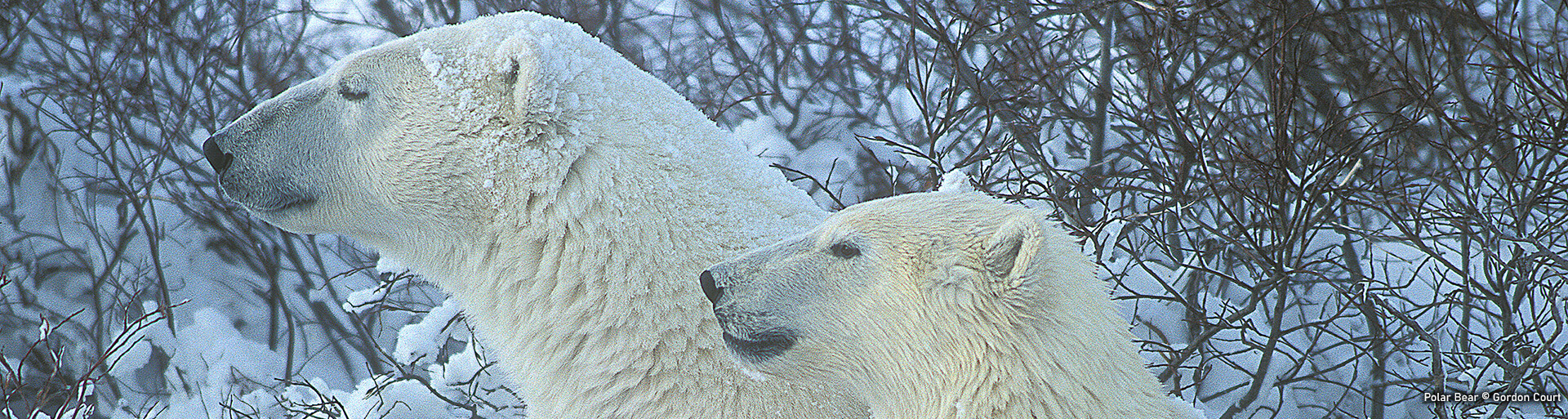
Jason Dicker is an Inuk from Nain, Nunatsiavut. He is currently the Wildlife Manager for the Nunatsiavut Government. He works on various wildlife related files ranging from polar bear to caribou and to migratory birds. He sits on several committees across Canada also related to wildlife and Inuit governance.
In 2012, after completing a technical diploma in Northern Natural Resources at the College of the North Atlantic, Jason transferred to Memorial University, Grenfell Campus in Corner Brook, Newfoundland to complete his Bachelor of Arts degree in Environmental Studies and his Master of Arts in Environmental Policy. While working towards completion of his undergraduate degree, Jason began to focus his studies around his interest in wildlife management and wrote his capstone undergraduate paper on the caribou hunting ban in northern Labrador. Jason decided to continue this imperative topic at the graduate level where his research helped identify and better understood the impacts of the caribou hunting ban in the lives of Inuit in Nunatsiavut.
Jason graduated with his Masters degree with the help and advice from Dr. Stephen Decker. He completed his research in support of his thesis entitled “Using Integrated Resource Management and the Public Trust Doctrine to Examine Wildlife Management Practices in Northern Labrador: A case study on the George River Caribou Hunting Ban”.
Roger Gallant
Roger Gallant is a Mi'kmaq from western Newfoundland and is currently working as an environmental consultant. He has a M.Sc. in Environment and Management, a B.Sc. in Environmental Science and Biology, a Masters Certificate in Project Management, and a Bachelor of Education (Post-Secondary). During the past several years, Roger has conducted various research studies and traditional knowledge initiatives. He has been active in the conservation and recovery of species at risk in insular Newfoundland. Recent activities have focused on the monitoring of piping plover (Charadrius melodus melodus) and several other avian species at risk in western NL; determining banded killifish (Fundulus diaphanus) dispersal and habitat requirements in NL; monitoring American eel (Anguilla rostrata) migrations; documenting traditional eel harvest practices; and, preserving Mi'kmaq traditional knowledge on culturally important species.
Eliane Grant
Eliane Grant is an Eenou (Cree) from Waswanipi in Eeyou Istchee. She is a wildlife biologist and holds a master’s degree in ecology from the Université du Québec en Abitibi-Témiscamingue (UQAT); she is the director of the Department of Natural Resources for the Cree First Nation of Waswanipi, a visiting professor at the School of Indigenous Studies, and the coordinator of the Certificate program in Land Management in Indigenous Context (UQAT). Her work and research focus on land disturbances affecting cultural practices and wildlife species of interest to the Eeyouch (Cree), with an emphasis on the link between traditional knowledge and science. She also carries out various wildlife and environmental projects and assists land users during government consultations.
Neil Jones
Neil Jones is Anishinaabe from Ketegaunseebee (Garden River First Nation, Ontario). He currently serves as the Environmental Stewardship Senior Policy Advisor at Robinson Huron Waawiindamaagewin, a treaty association representing 21 First Nations in and around the Lake Huron region.
Neil brings over 25 years of experience with Environment and Climate Change Canada (ECCC), where he worked on environmental research and policy, including the Species at Risk Act (SARA), the Fisheries Act (FA), and areas related to Indigenous Knowledge, Relationship, Engagement, Consultation, and UNDRIP.
He is a member of the Aboriginal Traditional Knowledge Subcommittee of COSEWIC. His stewardship approaches reflect the teachings of the Knowledge Holders he’s been fortunate to know and work with, as well as the Dish with One Spoon and the two row wampum belts. Neil holds a Bachelor of Science in Biochemistry and a Masters of Science in Biology.
Dr. Allyson Menzies
Allyson Menzies (she/her) was born and raised in Treaty 2 territory and is of Métis and settler ancestry. Her connection to land and wildlife was shaped through time spent on the prairies and continues to guide her work today. She now lives and works in Treaty 7 as an Assistant Professor at the University of Calgary. Her work focuses on community-based monitoring and the co-production of ecological knowledges to support the stewardship of culturally important species, including moose, geese, and bison, across central Canada. She works closely with Indigenous and non-academic partners to develop monitoring approaches and inform management decisions that are both scientifically rigorous and grounded in place, relationships, and local priorities. She approaches this work with a strong sense of responsibility to her own ancestors and to the Peoples whose lands she lives and works on, and whose relationships with these species long predate her own.
Dr. Ellen Simmons
Dr. Ellen Simmons is a faculty member and Instructor in the Department of Environmental Resources Technology with Nicola Valley Institute of Technology, an Indigenous post-secondary institution in Merritt, BC. She has worked within the communities throughout the syilx territory, including the En’owkin Centre in Penticton BC. Her work there has focused on Indigenous Knowledge, habitat enhancement and restoration, and Species at Risk Conservation and protection. She also serves on the Board of Directors of the Nature Trust of British Columbia and on the Credential Committee of Forest Professionals of British Columbia. Her maternal lineage includes Swampy Cree from Saskatchewan and Métis ancestry connected to the Red River Settlement. Her PhD research explored how Indigenous Knowledge systems and Western science might work alongside and complement one another, with a particular focus on complex systems science and kiʔlawnaɁ (Grizzly Bear; Ursus arctos) in the Southern Interior of BC.
Tiffany Traverse - Secwepémc (Kenpesq’t)
Indigenous Researcher, Land & Seed Steward
Tiffany (she/they) is a Secwépemc (Kenpesq't) & séme7 land and seed steward, language learner, Indigenous researcher, and food sovereignty advocate. Her passion for feeding people and firm belief in the right to healthy, culturally-appropriate foods for all, drives her work.
In some of her former emergency management ‘day jobs’, Tiffany engaged with stakeholders, partners, rights holders, and rural residents to help present education around wildfire prevention, mitigation and cultural fire (BC Wildfire Service, First Nations’ Emergency Services Society, Salish Firekeepers Society), as well as encourage autonomy in Indigenous land stewardship.
Tiffany now teaches native seed collection in her home territory of Secwepemcúl’ecw, with a concentration on culturally-appropriate species for restoration, incorporating Secwepemctsín language, traditional plant uses as medicine and food, and rare species ID/protection (Secwepemcúl’ecw Restoration & Stewardship Society).
In addition to her work with COSEWIC and the ATK Subcommittee, she sits on several active boards and committees, including: Salish Firekeepers Society, Lakes Secwepémc Foodland Conservation Society, and Indigenous Climate Action. Her hope is to continue being a ‘Weaver’, advocating to create better access to resources and knowledge, advocate for our collective seed and food security and sovereignty, and preparedness in the face of increasing climatic shifts.